Manchester Christmas Markets 2026: Best Areas, Hotels and Weekend Budget
Manchester’s Christmas markets are spread across the centre, so the useful decision is which route and hotel base fit your group, not which single entrance to find. Stay near the northern market squares for easy browsing or near Piccadilly for simpler rail arrivals. Most sites finish on December 22, while only Albert Square and Cathedral Gardens continue into January: a late festive break needs a different itinerary from a November shopping weekend.
1. Manchester Christmas Markets 2026: quick planning facts
Main season
6 November–22 December 2026.
Extended sites
Albert Square and Cathedral Gardens continue until 3 January 2027; Christmas Day is closed.
Typical hours
Craft stalls 10am–9pm; food and drink 11am–9pm. Check individual sites and holiday exceptions.
Sunday exception
Market Street closes at 6pm on Sundays.
Do not assume all ten market locations operate until January. The extended dates apply to Albert Square and Cathedral Gardens, and individual holiday hours still need checking.
2. Pick a hotel for either markets or train connections
For two nights, choose between being close to the busiest market cluster and being close to your arrival station. Both can work. The cost comparison should include the room configuration, breakfast, cancellation conditions and any local transport your itinerary actually requires.
🎄 Royal Exchange and the northern squares
Motel One Manchester-Royal Exchange is a named option to compare for St Ann’s Square, Exchange Square and the northern part of the centre. This base suits friends who want to return to the hotel between shopping and dinner. Ask for an exact group quote and bed arrangement; a convenient location does not establish that rooms are available at a particular price.
🚆 Piccadilly for staggered arrivals
Motel One Manchester-Piccadilly is an alternative to compare if rail convenience matters most. People arriving at different times can leave bags before joining the group. You will still need to walk or use local transport to different market areas, so do not schedule a reservation at the opposite end of the centre immediately after arrival.
💷 Avoid a false saving on the outskirts
A lower room price outside the centre can be worthwhile if the return service is convenient. Add the cost of all planned journeys and a realistic late-night fallback before voting. If eight friends may leave dinner at three different times, one shared-taxi estimate is not a complete transport budget.
3. Getting around: train first, trams when useful
A central market route can largely be walked, with trams useful for longer connections or tired legs. Buying a pass automatically is not always the best value: decide where you will actually travel, then compare the relevant ticket with individual fares.
✈️ Airport to Piccadilly
Manchester Airport describes the train journey to Piccadilly as around twenty minutes. Add time for baggage, the terminal walk and waiting for a service; this is not a plane-to-hotel promise. Check the date-specific timetable and ticket conditions. A tram may serve a more useful stop for some hotels, but compare the full journey rather than assuming all rail services take the same time.
🚊 Weekend tram tickets
TfGM’s adult weekend travelcard runs from after 6pm Friday until the last tram on Sunday. Check the zones you need and current price before buying. A Friday daytime arrival or Monday departure may require separate cover. Do not assume a tram product also includes your airport train or every bus journey.
🚶 Build a short route with breaks
Choose a manageable sequence of nearby squares and a lunch stop rather than zigzagging between every market. Save a clear meeting point for each browsing session. When using contactless or paper tickets, follow the operator’s current instructions and keep each traveller’s payment method consistent; one friend’s pass does not cover the group.
4. Which market areas to prioritise
Treat the official map as a menu. A group that wants gifts, a group that wants food and a group with children may prefer different stops. Covering fewer areas with time to enjoy them is more useful than attempting all ten locations in one afternoon.
🏛️ Albert Square and Lincoln Square
Use Albert Square as one major stop, then consider Lincoln Square for food and drink. Check the current council map before setting a meeting pin, particularly around access routes and busy entrances. The extended Albert Square season can support a later trip, but it does not mean the surrounding sites share its January closing date.
🛍️ St Ann’s Square and nearby streets
Combine St Ann’s Square with nearby market streets for a shopping-focused session. Split into pairs or small groups, then reunite at an agreed time. A large group stopping together at every stall moves slowly and can block pedestrian flow. Keep gifts in personal budgets rather than turning every purchase into a shared expense.
🎡 Cathedral Gardens and the northern end
Make Cathedral Gardens a separate stop if its activities appeal to your friends. Check any paid attraction’s own booking and operating information. Do not assume a ride or skating session is included in free market browsing, or that it runs for the same hours as the surrounding stalls.
5. A Friday-to-Sunday plan for friends
This schedule works best during the main November–December season. For a trip after December 22, replace closed market areas with ordinary city activities and verify the two extended sites. Keep the first evening flexible enough for delayed trains.
🍽️ Friday: check in and one shared meal
Meet after luggage drop-off, take a short orientation walk and have a prebooked dinner. A late arrival can join at the restaurant instead of searching several squares. Avoid collecting money for a Friday attraction that depends on every train being punctual. Agree the next morning’s meeting time before people go their separate ways.
🎄 Saturday: two market sessions
Start with a shopping route around the northern squares, then take a seated lunch break. Visit Albert Square and a food-focused stop later, allowing time to return to the hotel before dinner if people want to. Leave an optional evening activity for those with the budget and energy rather than making it compulsory for all.
☕ Sunday: breakfast and a final choice
Pack and store bags, then choose either a short return to a favourite market or another city visit. Keep the final activity near a practical route back to the hotel and station. Do not leave Market Street shopping until late evening on Sunday. People with earlier trains should be able to leave without cancelling the group’s whole afternoon.
6. Reservations, wet weather and group spending
A city break can become expensive through small unplanned purchases, especially when everyone assumes somebody else is tracking them. Set the shared budget around rooms and agreed meals; keep shopping, extra drinks and optional attractions separate.
🍴 Book a dinner that fits the whole group
Ask the restaurant about deposits, dietary choices, set menus and the permitted table duration. Confirm the address rather than choosing on the basis of a broad city-centre description. A booking after the market session gives everyone somewhere warm to sit and avoids relying on enough standing space at a busy food stall.
🌧️ Have a nearby indoor fallback
Rain does not require abandoning the weekend. Shorten the outdoor route, choose a café break or check availability at an indoor attraction. Avoid replacing one free session with an expensive compulsory ticket. Save the plan and hotel address offline, and arrange a meeting point where people can wait without blocking a tram stop or market entrance.
🧾 Make optional costs explicit
Tell friends which meals and activities are included in the collection and which they pay themselves. Record shared purchases when they happen. If someone skips a paid activity, remove that cost from their share rather than splitting everything equally by default. Before booking nonrefundable rooms, agree what happens if a person withdraws.
7. A realistic two-night budget
These allowances are per adult sharing accommodation for two nights. They include ordinary meals, local and airport transport, selected attractions and a contingency. They are editorial planning estimates checked against the trip structure on November 9, 2026, not live hotel or ticket quotations. Travel to the city is separate.
Two nights sharing a room
Per person; planning allowance
£120–260
Meals and ordinary drinks
Per person; planning allowance
£85–135
Local and airport transport allowance
Per person; planning allowance
£15–40
Optional attraction allowance
Per person; planning allowance
£0–40
Contingency
Per person; planning allowance
£25–45
Estimated total
Two nights per person, excluding travel to the city
£245–520
💡 Pro Tip: Replace estimates with dated quotes before collecting the final group payment.
An illustrative middle budget is £180 for the room share, £105 for food, £25 for local travel, £25 for optional activities and £35 contingency: £370 per adult, or £2,960 for eight. Travel to Manchester and gifts are extra. Replace the hotel estimate with the actual dated quote, especially if your weekend coincides with another major city event.
8. Turn the shortlist into a group plan
Agree the maximum comfortable budget before asking friends to pay. Give everyone two hotel choices and a clear reply deadline, then appoint one owner for each reservation. Record cancellation deadlines and the amount each person owes. If somebody withdraws, apply the agreed cancellation arrangement rather than leaving the organiser to cover the gap.
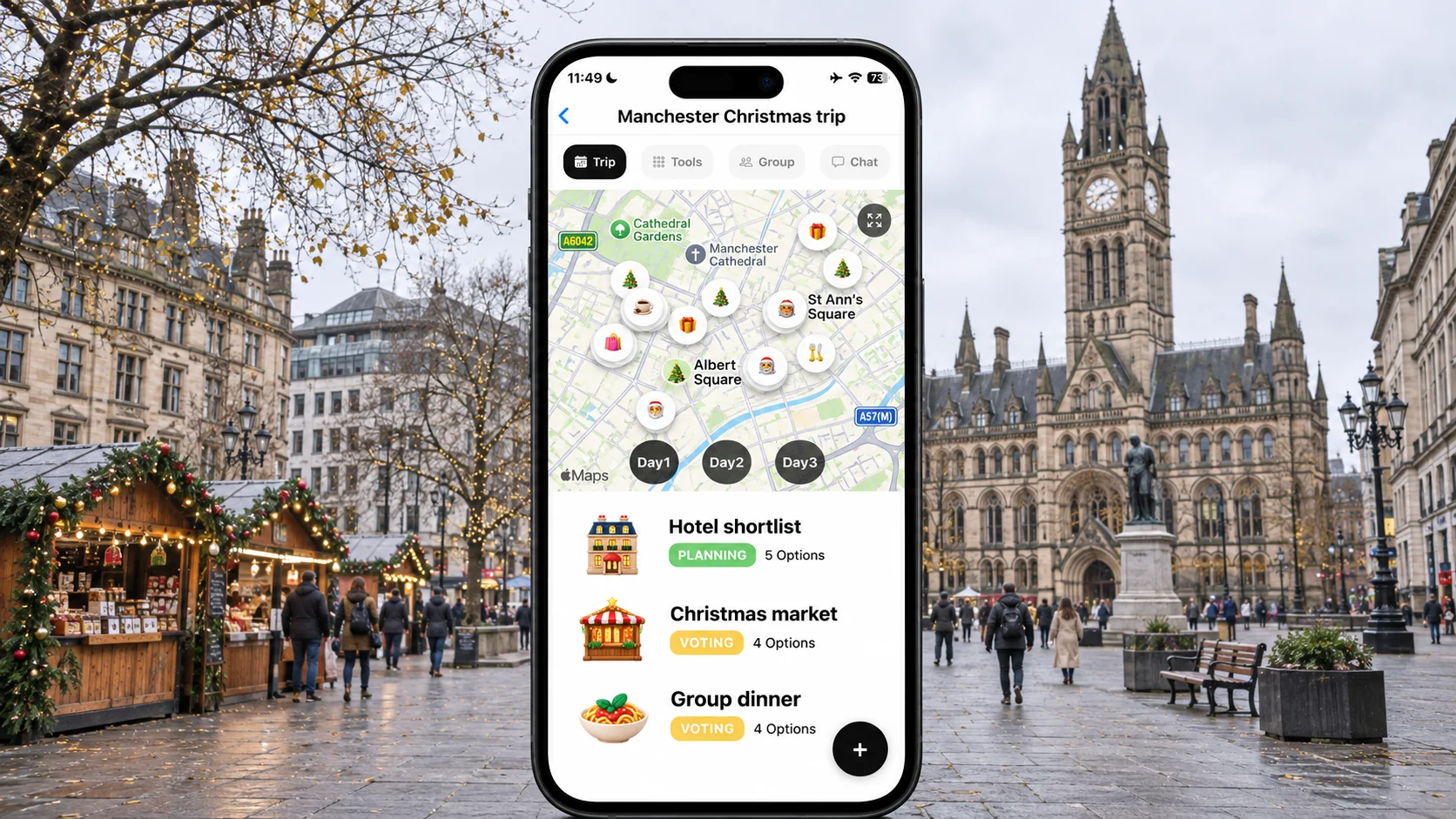
Keep hotel options, activity votes, arrival details and the agreed itinerary together in FlowTrip. Leave tentative plans marked as proposals until the supplier confirms them. Separate shared costs from optional rides, shopping and drinks, and save essential addresses offline so the weekend still works when a phone battery runs low.
Frequently asked questions
Do all Manchester Christmas markets stay open into January?
No. The council lists January 3, 2027 for Albert Square and Cathedral Gardens; the main market season ends December 22, 2026.
Is Piccadilly or Royal Exchange better for a hotel?
Piccadilly suits rail arrivals and luggage handling. Royal Exchange suits the northern market cluster. Compare your full itinerary and room quote rather than choosing only by distance.
Do we need a tram pass?
Not necessarily for a central walking itinerary. Compare your actual journeys and zones; the weekend travelcard starts after 6pm Friday and ends with Sunday’s last tram.
Can we visit on Christmas Day?
The council’s published information says the markets are closed on Christmas Day. Check separate holiday hours for other dates.
Sources and review date
Research reviewed November 9, 2026. Official organisers, transport operators, hotel websites and tourism offices support the dates and practical details. Accommodation and spending ranges are planning estimates.
- Manchester council: 2026 Christmas markets
- Council market map and hours
- TfGM weekend tram travelcard
- Manchester Airport trains
- Motel One Royal Exchange
- Motel One Piccadilly
Planning with Friends? Try FlowTrip App 🚀
Different arrivals, budgets and activity choices can make a Christmas weekend difficult to organise.
FlowTrip keeps hotel votes, shared plans and travel decisions together for everyone.
- 🗺️Clean Itinerary and Map overview - everyone knows where to be, no one gets lost in the chat
- 📸Build your trip by uploading Screenshots - no typing needed, just drop your restaurant reservation
- 🤖AI Trip Idea Check - validates your trip based on your preferences, destination and season
- ✨AI Recommendations - restaurants, hotels, coffee spots, activities based on your preferences
- 🗳️Polls and voting - just suggest an activity and decide together
- 💬Built-in chat - keep all trip conversations in one place
- 💰Expense tracker - split costs and track spending
- 🎒AI Packing list - never forget essentials, AI will help you to take care of it
- ☀️Weather Forecast - You will know if the weather changes