NYC Marathon 2027 Spectator Guide: Best Viewing Spots and Meeting Points
The New York City Marathon begins on Staten Island and finishes in Central Park, so spectators should ignore the start and build a subway-first plan around one Brooklyn sighting, one later Manhattan sighting and a precise reunion outside the runner-only finish flow.
1. NYC Marathon 2027 spectator facts
Planning date
Sunday, November 7, 2027; final event details remain subject to NYRR confirmation
Course
Staten Island, Brooklyn, Queens, Manhattan, the Bronx and Central Park
Best simple plan
Fourth Avenue in Brooklyn, then First or Fifth Avenue, then reunion
Transport rule
Subway plus walking; do not rely on taxis crossing the course
The 2027 spectator map is not published yet. NYRR's established course and finish system provide a reliable planning framework, but access points, cheer zones, subway advice and Family Reunion streets can change. Replace the locations below with the final 2027 guide before race week.
2. Skip Staten Island and start in Brooklyn
NYRR strongly encourages runners to use assigned official transportation to Fort Wadsworth. The Staten Island Ferry, Midtown buses and New Jersey buses operate as runner logistics, not spectator shuttles; friends and family cannot ride with the athlete. Say goodbye at the hotel or transport entrance, then use the quiet early hours to reach Brooklyn. A spectator trip to the start creates hours of restricted access and leaves the group on the wrong side of the Verrazzano-Narrows Bridge.
The marathon crosses the bridge without public spectators, then enters Bay Ridge and follows Fourth Avenue north. This makes Brooklyn the practical first contact. Tell the runner the exact avenue corner and the side of the road. A message saying “somewhere in Park Slope” is useless when both sidewalks are full and the runner is moving through thousands of people.
Share one screenshot: mark the course direction, your subway exit, the side where you will stand and a permanent landmark. The runner should know where to look before leaving for Staten Island.
3. The best viewing areas
🌉 Bay Ridge: early and neighborhood-focused
Fourth Avenue around the 70s and 60s offers the first accessible miles after the bridge. Crowds are usually thinner than farther north, which helps families and anyone who values space. The R train is the natural anchor, but service changes can lengthen the trip. This point is too early to combine casually with several later sightings; leave immediately if Manhattan is the next commitment.
🏘️ Park Slope and Downtown Brooklyn: best first-time choice
Fourth Avenue from roughly 9th Street toward Atlantic Avenue combines strong atmosphere with multiple subway options. Park Slope restaurants and cafés give supporters somewhere to wait, while Atlantic Terminal creates route flexibility. Stand south of the busiest transfer if you want a cleaner exit. Do not attempt to cross Fourth Avenue once the race fills the road.
🎶 Lafayette Avenue and Williamsburg: loud middle miles
Fort Greene, Clinton Hill, Williamsburg and Greenpoint deliver some of the course's best neighborhood energy. Lafayette Avenue is especially festive; Williamsburg adds dense crowds and more food choices. Subway geometry is less direct than Fourth Avenue, so this works best as the only Brooklyn sighting or for spectators staying nearby. Check the exact course bend before choosing a station.
🌆 Long Island City: useful but easy to misjudge
Queens provides a chance before runners cross the Queensboro Bridge into Manhattan. The bridge has no spectators, and the nearby subway platforms become crowded. Long Island City is a smart option for a group staying in Queens, but it is not automatically faster than going directly to First Avenue. Build the next move using station-to-station time, not the visual distance on a map.
📣 First Avenue: the classic late-race wall of sound
Runners emerge from the quiet Queensboro Bridge onto First Avenue around mile 16. The avenue is long, straight and loud. Midtown blocks are intensely crowded; farther north can make it easier to be seen. The official guide has used a charity cheer zone around East 120th Street. Confirm its 2027 location, and remember the runner continues into the Bronx before returning down Fifth Avenue.
🌳 Fifth Avenue and Central Park South: final support
Fifth Avenue above Central Park catches runners at their hardest late climb. Central Park South offers huge energy before the course re-enters the park. Both are crowded and movement is slow. Pick this as the final sighting, arrive early and stay outside the restricted finish. Seeing the runner here means accepting a delayed walk to Family Reunion.
4. Three spectator routes that work
✅ Low-stress
Watch once on Fourth Avenue, then travel to the finish-side reunion. This is the best plan with children, older relatives or a first-time visitor.
🚇 Two sightings
Choose Park Slope plus upper First Avenue or Fifth Avenue. Use subway only, and add at least 25 minutes beyond the normal journey.
📍 Manhattan only
Watch on First Avenue, then Fifth Avenue only if the runner's pace and subway margin make it comfortable. Otherwise go directly to reunion.
A 3:15 runner and a 5:30 runner create completely different spectator days. Start with the runner's assigned wave and realistic pace, calculate expected clock times at each mile, then add a wide buffer. The official app can track bib splits, but a moving dot is not exact GPS. Do not abandon a prepared position because the display jumps.
5. Subway strategy
The subway is the only scalable way to move around a five-borough road race. Load OMNY-compatible payment before Sunday and give every adult an independent way to pay. Save the MTA service-status page, but also know an alternate line. Weekend maintenance, crowd controls and closed station entrances can change the fastest route.
Avoid buses that need to cross the route. Avoid rideshare pins near the course, Central Park or a bridge approach. A driver may accept while remaining physically unable to reach you. When a group member needs step-free access, verify elevators on the day through MTA accessibility alerts and choose stations with redundancy.
Move away from the course before opening directions. The nearest station entrance may be blocked or on the wrong side. Walk one or two avenues if that produces a cleaner subway connection. Set a group departure time: “leave after we see Alex” is better than waiting for everyone to finish posting photos.
6. Finish and Family Reunion
The finish line in Central Park is controlled and ordinary spectators cannot simply stand beside it without the relevant ticket or access. After finishing, runners continue through medals, hydration, medical support and baggage or poncho flows. Established NYRR guidance routes runners onto Central Park West, with exits and Family Reunion farther south. The walk can take much longer than the map suggests.
Choose a primary meeting point using the final official alphabet or street system, then choose a backup outside the secure area. Good backups are a hotel lobby, Columbus Circle landmark or named café with an exact address. “By Central Park” covers hundreds of acres. Agree that if phones fail, everyone goes to the backup after a stated time.
The spectator carries the runner's warm layer only if the runner has requested it and can identify the bag. Do not plan a complicated restaurant reservation immediately after the predicted finish. Allow at least 60–90 minutes for exit and reunion, more for later waves or a runner needing medical attention.
7. Race-day timetable
🌅 Before the start
Runner takes assigned transport alone. Spectators eat, check MTA notices and travel directly to the first point. Everyone has the bib number, clothing description and offline plan.
📸 Brooklyn sighting
Arrive 30–45 minutes before the calculated window. Stand on the agreed side, keep signs compact and leave only after the runner passes or the window clearly expires.
🔁 Decision point
Recalculate the runner's progress against real transit. If the next sighting has less than a 30-minute safety margin, skip it and protect the reunion.
🏅 Post-finish
Wait through the runner-only exit, use the primary reunion, then fallback. Offer warm clothing, water and a simple meal before sightseeing or nightlife.
8. Spectator weekend budget
These are planning ranges per spectator for three nights sharing a twin room, excluding flights. November 2027 hotel inventory and event prices are not fixed.
Three hotel nights
Manhattan, Brooklyn or Queens sharing
$450–$1,350
Food and coffee
Three days plus recovery meal
$180–$420
Airport and subway
Public transport plus one contingency ride
$45–$140
Spectator supplies
Layers, sign, charger and snacks
$25–$90
Optional sightseeing
Museum, observation deck or cruise
$40–$180
Spectator ground total
Per person before flights
$740–$2,180
💡 Pro Tip: Keep runner entry, expo shopping and personal race supplies separate from shared hotel and meal costs.
9. What to carry
What to Pack
- 📱Phone and power bank — Official tracking, MTA routes and the reunion plan saved offline
- 🪧Compact sign — Readable from the course without blocking other spectators
- 🧥Weather layers — A November wait can shift from cold shade to sun and wind
- 🥪Food and water — For spectators during long waits and crowded transfers
- 👟Walking shoes — Expect miles of platforms, barriers and finish-area walking
- 🗺️Offline screenshots — Each point, side of road, station exit and backup reunion
Frequently asked questions
When is the 2027 New York City Marathon?
The planning date is Sunday, November 7, 2027. NYRR has opened its 2027 entry information, but detailed race-week and spectator operations will be published closer to the event.
Can spectators go to the Staten Island start?
No. Official start transportation is for registered runners, and friends and family cannot ride with them. Spectators should meet the runner before departure and go directly to an on-course viewing point.
Where is the best place to watch the NYC Marathon?
Fourth Avenue in Brooklyn is easiest for a first sighting, First Avenue offers a loud late-race atmosphere, and Fifth Avenue or Central Park South gives a final sighting before the restricted finish.
Where should spectators meet runners after the finish?
Use the official Family Reunion system when the 2027 map is published, plus a second fixed point outside the secure finish area. The runner may need significant time to exit Central Park and Central Park West.
Research checked October 4, 2026 using NYRR's 2027 entry page and established official start, course, spectator and finish guidance. Final 2027 instructions override this planning framework.
Planning with Friends? Try FlowTrip App 🚀
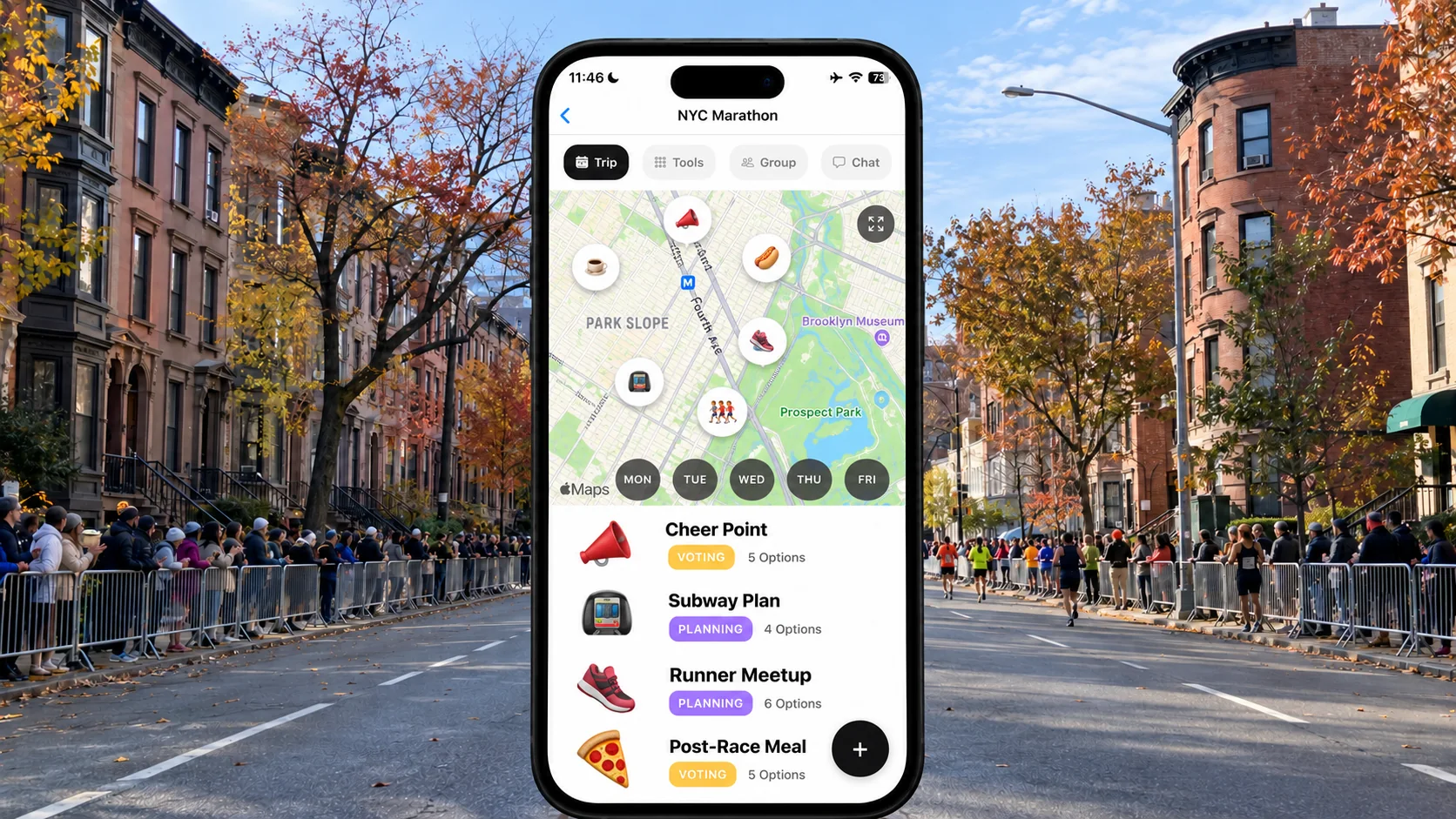
A five-borough course, crowded subways and a long finish exit can turn vague spectator plans into missed sightings.
FlowTrip keeps pace windows, viewing sides, subway routes and reunion fallbacks visible to the runner and every supporter.
- 🗺️Clean Itinerary and Map overview - everyone knows where to be, no one gets lost in the chat
- 📸Build your trip by uploading Screenshots - no typing needed, just drop your restaurant reservation
- 🤖AI Trip Idea Check - validates your trip based on your preferences, destination and season
- ✨AI Recommendations - restaurants, hotels, coffee spots, activities based on your preferences
- 🗳️Polls and voting - just suggest an activity and decide together
- 💬Built-in chat - keep all trip conversations in one place
- 💰Expense tracker - split costs and track spending
- 🎒AI Packing list - never forget essentials, AI will help you to take care of it
- ☀️Weather Forecast - You will know if the weather changes